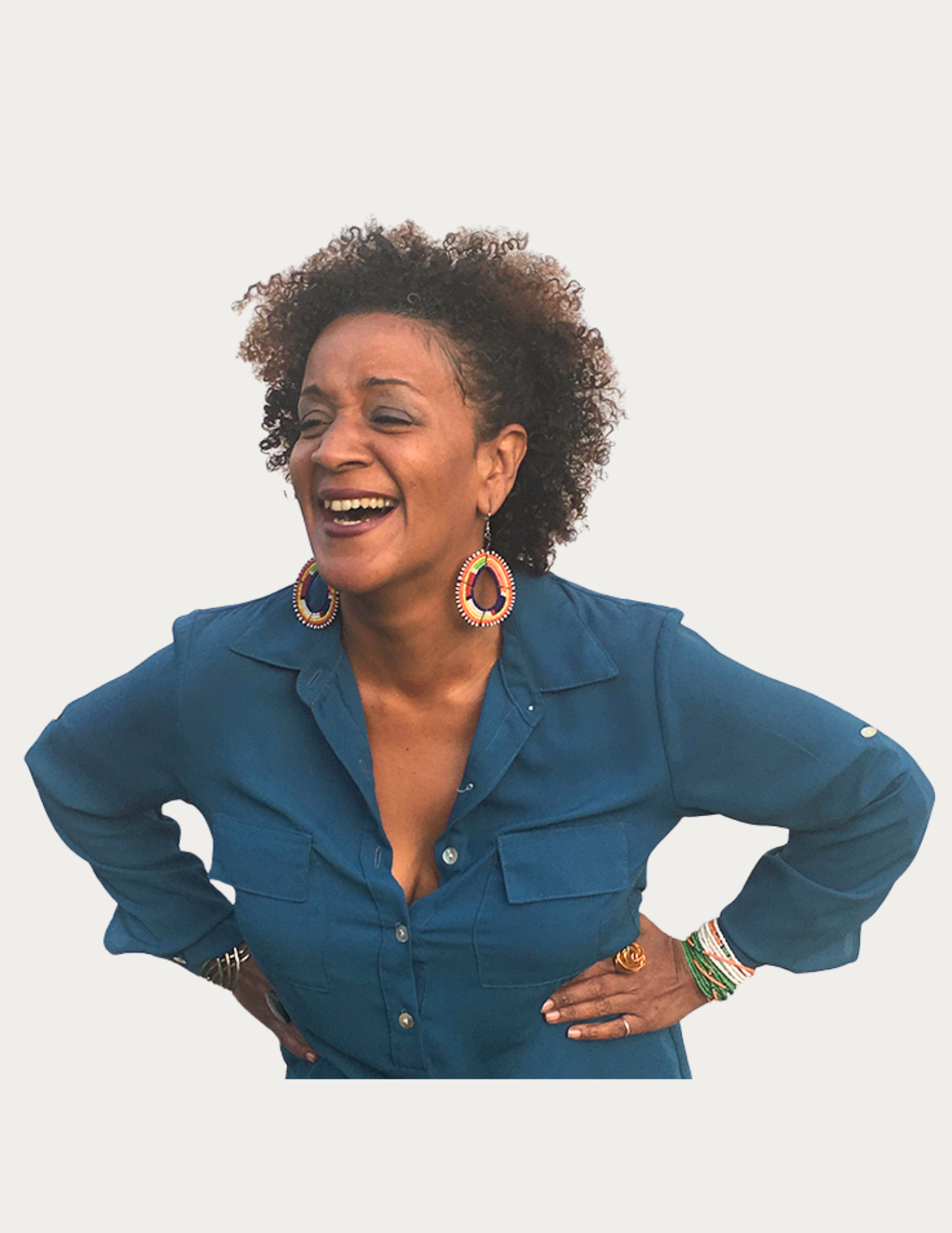
“I design the systems that allow the work to survive its founder. Not because I studied it — because I’ve lived inside what happens when those systems aren’t there.”
Janeen Johnson · Stewardship Architect
Long before I understood the language of systems, leadership, or cultural architecture, I was a student searching for connection.
In 1995, I attended a master workshop at City College of San Francisco. Malonga Casquelourd was the teacher. I arrived curious. I left transformed.
What began as a single class became an initiation into a cultural lineage, a community, and a way of seeing the world that would shape everything that followed. I followed Malonga to Oakland, attending community classes twice a week at what is now the Malonga Casquelourd Center for the Arts. Then, in 1997, he invited me to join his performing arts company, Fua Dia Kongo, rooted in Congolese cultural tradition.
I thought I was learning to dance.
What I was actually learning was how culture survives.
Over time, I earned a place within the inner circle of artists and leaders Malonga mentored closely, eventually serving as his teaching assistant at San Francisco State University — where he was part of a pioneering cohort that legitimized ethnic dance as a formal subject of study and graduation. His class, Black Dance Experience, was among the first of its kind within one of the nation’s first Ethnic Studies programs.
I learned from him in classrooms, rehearsals, community gatherings, and behind the scenes. I watched him teach, build partnerships, cultivate leaders, and create pathways for culture to thrive. I was not observing the system. I was inside of it.
During those years, I was accepted into a study abroad exchange program and traveled to the University of Zimbabwe in Harare to study African arts and spirituality. Malonga made sure I was prepared — connecting me, in advance, to his colleague Dr. Dumisani Maraire, a pioneering Zimbabwean ethnomusicologist, master of the mbira, and the man credited with introducing Zimbabwean music to North America. Before returning home, I traveled through Ghana, Togo, Benin, and Côte d’Ivoire.
That journey expanded my understanding of culture as an ecosystem — interconnected, layered, and living. It shaped how I build to this day.
Then, in 2003, everything changed.
Malonga passed unexpectedly.
In the aftermath, I stepped into the role of Managing Director of Fua Dia Kongo while grieving the loss of my teacher, mentor, and friend.
What became clear very quickly was that Malonga was not just the founder.
He was the infrastructure.
The vision, the relationships, the programming, the funding network, and much of the institutional knowledge lived in and through him. When he passed, the organization didn’t simply lose its leader. It lost the center that held everything together.
I found myself navigating a responsibility I had never anticipated: helping to carry forward a cultural legacy while simultaneously learning what it takes to sustain one.
It revealed the gap between cultural vision and organizational capacity. It taught me that talent, passion, and purpose alone are not enough. The work itself must be supported by structures capable of carrying it forward.
I was grieving. I felt unprepared.
Yet I was entrusted with something larger than myself.
And I built.
“I design the systems that allow the work to survive its founder. Not because I studied it — because I’ve lived inside what happens when those systems aren’t there.”
The lesson I learned at Fua Dia Kongo did not stay at Fua Dia Kongo.
I began seeing the same pattern repeatedly.
Across the Bay Area arts ecosystem, I encountered this reality in many forms — brilliant vision, deep community commitment, and fragile infrastructure. Not just in organizations, but in individual artists, choreographers, and cultural leaders building their own platforms. Each carried extraordinary purpose. Yet too often, the systems needed to sustain that work were either underdeveloped or absent altogether.
At first, I thought I was observing isolated challenges.
I realized I was witnessing something systemic.
In 2011, in partnership with community colleagues, I launched Flowtown411 — a professional arts services initiative focused on arts administration, touring and production management, theatrical design, and funding development. Looking back, I was already building tools to address the problem long before I had language for it.
At the same time, I was serving an eighteen-year tenure with Cirque Mechanics — first as Touring Production Stage Manager and later as Director of Production. Touring throughout North America, Europe, and Asia, I experienced a very different operating model.
There, I experienced what becomes possible when structure, trust, and accountability are fully aligned.
I was trusted to lead. Roles were clearly defined. I had the authority and autonomy to make real-time decisions impacting budgets, timelines, and touring logistics — and the full accountability to follow through.
What I came to understand changed everything:
Structure is not what follows resources.
Resources follow structure.
Funding. Partnerships. Talent. Trust.
All of it.
The challenge was rarely the people.
It wasn’t a lack of talent.
It wasn’t a lack of passion.
It wasn’t a lack of commitment.
It was a lack of systems capable of supporting the scale of the vision.
Looking back, I realized my work was never limited to producing programs, coordinating events, managing organizations, or syncing logistics.
I was designing the conditions that allow meaningful work to endure.
The relationships. The leadership pathways. The operational systems. The decision-making structures. The partnerships. The stewardship practices.
The architecture.
The work itself may take many forms.
My role does not.
I build what can hold the work.
O.Y.A. Strategies was born from that realization.
I design what allows culture to survive its founder.
I help cultural leaders, artists, organizations, and institutions build the systems, structures, and pathways that allow meaningful work to endure, evolve, and expand.
Because legacy is not what we preserve.
It is what we prepare others to carry forward.
Meaningful work rarely struggles because it lacks vision. More often, it struggles because the systems supporting that vision are incomplete. I see this across the cultural ecosystem — in artists building independent practices, creative entrepreneurs growing mission-driven ventures, cultural leaders stewarding communities, and organizations carrying decades of history.
Some focus on people but neglect planning.
Some focus on planning but neglect succession.
Some focus on legacy without addressing the human capacity required to sustain the work today.
The Cultural Stewardship Blueprint™ brings these elements together into a single framework:
Human Capacity.
Structural Planning.
Stewardship & Legacy.
Each influences the others. When one is overlooked, the work becomes vulnerable. When all three are aligned, the work becomes sustainable.
Whether I’m working with an artist launching a new initiative, a founder building an organization, or an institution stewarding a cultural legacy, the goal remains the same:
To build what can hold the work.
Not only for today.
But for the people who will carry it tomorrow.
O.Y.A. is named for Oyá — the Yoruba orisha of transformation, the force that moves through change, where endings make space for new systems to emerge.
My modern interpretation: Optimize Your Assets.
Because the asset is not abstract. The asset is your cultural heritage. Your living traditions. Your knowledge. Your relationships. The community you are stewarding.
That is what is worth building for.
I help define and advance a field of practice — rooted in cultural stewardship, system design, and legacy building. Every blueprint, every partnership, and every engagement contributes to a growing body of knowledge about how meaningful work can endure, evolve, and be carried forward across generations.
O.Y.A. Strategies is the first form that vision takes.
It will not be the last.
Meaningful work deserves more than passion. It deserves structure, stewardship, a future.
If you’re ready to build what can hold the work — let’s begin.